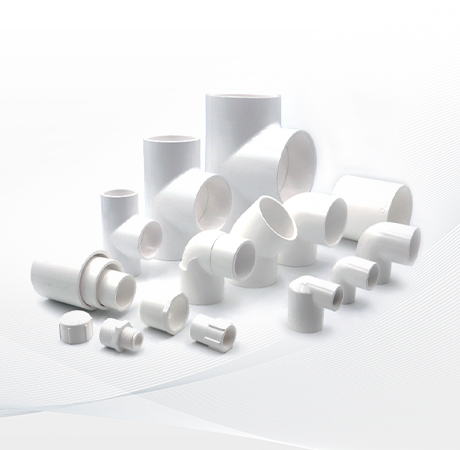

When working with water pipe fittings, accurate measurement is one of the most essential steps in achieving a secure and efficient plumbing system. At LESSO, we support businesses and project teams with PVC solutions that perform well across commercial and industrial applications. Understanding how to measure PVC pipe and fittings correctly helps ensure compatibility, prevents installation issues, and supports long-term system performance.
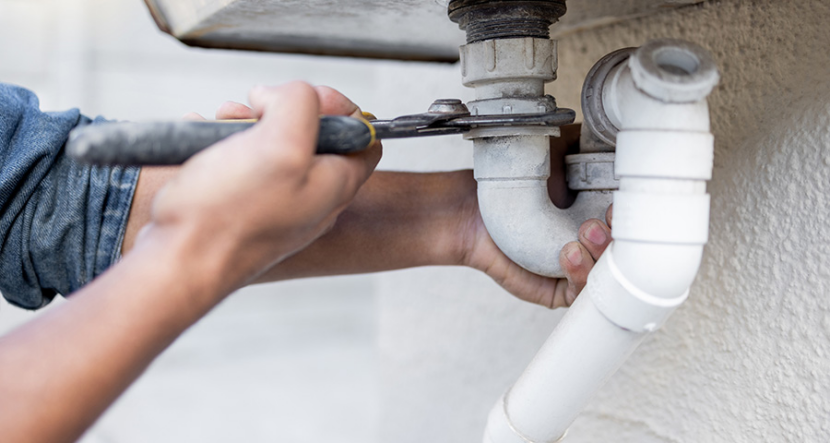
Before measuring any PVC component, it is important to recognize that PVC pipes are classified by nominal pipe size (NPS) rather than the pipe's exact external or internal diameter. This means the labelled size does not equal the actual physical measurement. For example, a 1-inch PVC pipe typically has an outer diameter slightly larger than 1 inch.
When selecting water pipe fittings, we always match them to the nominal size instead of the physical diameter. This industry standard ensures that all components within the same category are compatible.
Measuring the Outer Diameter of PVC Pipes
To begin, measure the pipe's outer diameter (OD) using a caliper or measuring tape. Wrap the tape around the pipe's widest point to find its circumference, then divide by 3.14 if you need the OD. This value helps confirm whether the pipe aligns with its nominal size chart.
At LESSO, we provide PVC pipes manufactured with consistent dimensions to meet industry specifications, allowing businesses to confidently match OD measurements with fittings for smooth assembly. Our PVC pipes are suitable for projects throughout North America, meeting local standards and installation requirements.
The inner diameter (ID) is another essential metric, especially when assessing flow capacity and pressure requirements. To calculate the ID, measure the wall thickness on one side, multiply it by two, and subtract from the outer diameter.
Accurate ID measurement supports proper system design, particularly for applications requiring efficient water flow. Our PVC water pipe solutions are engineered with stable wall thicknesses to help businesses maintain predictable system performance.
Fittings such as elbows, tees, couplings, and adapters are measured differently from pipes. The sockets on fittings are sized by the nominal pipe size, meaning a fitting marked 2 inches is designed to hold a 2-inch nominal PVC pipe.
When measuring fittings:
Measure the socket diameter to ensure the pipe can insert properly.
Consider the insertion depth, which affects how much pipe length is lost within the fitting.
For threaded fittings, measure the inside diameter of the threads, ensuring proper match with the pipe's male or female threaded ends.
LESSO's PVC water pipe fittings maintain strict dimensional consistency, helping installers achieve accurate connections across various plumbing layouts.
Correct measurement ensures structural integrity, reduces downtime, and avoids unnecessary material waste. Whether installing drainage lines, cold-water supply systems, or commercial pipelines, precise sizing promotes leak-free performance and easier maintenance.
Our team at LESSO designs pipe and fitting systems that align with global measurement standards, giving businesses a reliable foundation for long-term plumbing operations.
Knowing how to measure PVC pipe and fittings is essential for any professional working with modern water systems. By understanding nominal sizing, correctly identifying OD and ID values, and checking fitting dimensions, businesses can improve installation accuracy and overall system reliability. At LESSO, we continue to support partners with durable PVC pipes and water pipe fittings designed for dependable performance across a wide range of applications.

Tel
(951) 547-6888
Fax
(951) 547-6886
Address
1010 Railroad Street, Corona, CA 92882
Copyright © 2026 CHINA LESSO.ICP No.1302348 Cookie-Policy


TOP