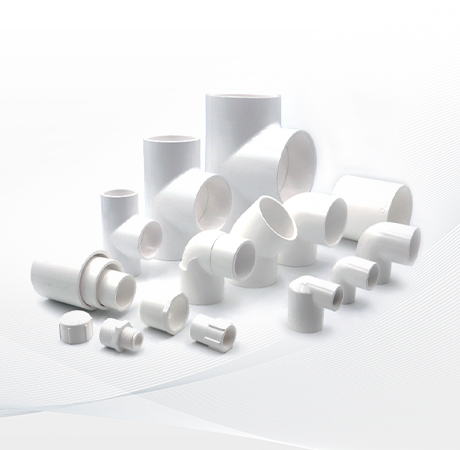

In plumbing installations, understanding how a PVC pipe and elbow fit together is essential for creating smooth, durable systems. As a pipe fitting manufacturer, LESSO provide high-quality PVC pipe and fittings designed to simplify installation and support reliable performance in commercial, industrial, and residential projects. Proper assembly of pipes and elbows ensures effective water flow, leak-free connections, and long-term system stability.

PVC elbows are commonly used to change the direction of a pipeline, typically at 45 or 90 degrees. Their function may seem straightforward, but achieving a tight, secure connection requires careful alignment and preparation. Incorrect fitting can lead to leaks, misaligned pipelines, or stress points that compromise the system's durability.
As a pipe fitting manufacturer, LESSO emphasizes consistent dimensions and precise tolerances, making it easier to fit PVC pipes and elbows accurately.
Before joining, both the pipe and the elbow should be cleaned and inspected. Remove any burrs or debris from the cut pipe end to ensure a smooth fit into the elbow socket. Some projects may require a primer to soften the PVC surface before applying solvent cement. Priming both the pipe and fitting can improve the bond and reduce the risk of leaks over time.
LESSO's PVC pipe and fittings are manufactured to meet strict quality standards, offering smooth surfaces that facilitate proper preparation and application.
Once the pipe and elbow are prepared, the pipe is inserted into the elbow socket. The correct insertion depth is important—pushing the pipe fully into the socket ensures a secure fit and proper alignment. A slight twisting motion as the pipe is inserted helps evenly distribute the solvent cement, forming a stronger joint.
The snug fit between the pipe and elbow provided by LESSO products supports a seamless connection and helps maintain system integrity under normal operating conditions.
After assembly, the joint should be held in place for a few seconds to allow the cement to begin curing. For larger projects, it is common to dry-fit all components first to confirm proper alignment and slope. Once the system is confirmed, solvent cement can be applied, and the connections are finalized.
LESSO's PVC pipes and elbows are designed with accurate socket depths and uniform wall thicknesses to ensure consistent bonding during installation, reducing the need for adjustments or rework.
Joining a PVC pipe and elbow correctly provides several advantages:
Minimizes the risk of leaks and system failure
Supports smooth water flow through the pipeline
Reduces maintenance requirements over time
Improves overall reliability and lifespan of the plumbing system
These benefits are crucial for both commercial and residential plumbing projects, where downtime or frequent repairs can be costly.
Understanding how a PVC pipe and elbow fit together is essential for any professional working with modern plumbing systems. By properly preparing surfaces, ensuring correct insertion, and using high-quality PVC pipe and fittings from LESSO, businesses can achieve reliable, leak-free connections. As a trusted pipe fitting manufacturer, LESSO continues to support contractors and facility teams with products that meet industry standards and simplify installation for long-term performance. Installers and project teams across North America rely on LESSO fittings to keep pipelines flowing efficiently and connections solid for years to come.

Tel
(951) 547-6888
Fax
(951) 547-6886
Address
1010 Railroad Street, Corona, CA 92882
Copyright © 2026 CHINA LESSO.ICP No.1302348 Cookie-Policy


TOP