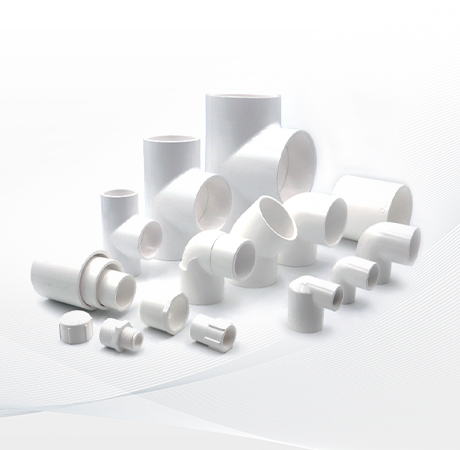

When working with PVC pipe and fittings, ensuring a strong and reliable connection is essential for both industrial and commercial applications. At LESSO, as one of the most experienced PVC pipe fittings manufacturers, we understand the importance of proper installation methods and quality materials. In this article, we explore the steps and considerations for gluing PVC pipe and fittings effectively.

Proper gluing starts with preparing both the pipe and the fitting. Cut the pipe to the required length using a fine-toothed saw or pipe cutter for a clean edge. Deburr both the inside and outside edges to prevent damage and ensure smooth insertion. Clean the pipe end and fitting socket with a PVC cleaner or primer to remove dirt, grease, or contaminants. Thorough cleaning ensures the adhesive bonds effectively to the PVC surfaces.
Once the surfaces are prepared, apply PVC cement to both the pipe end and the fitting socket. Use a generous but controlled amount to cover the surfaces evenly. PVC cement works by softening the outer layer of the pipe and the inner layer of the fitting, allowing them to fuse together for a solid joint. As a PVC pipe fittings manufacturer, we recommend using cement compatible with the pipe's schedule and diameter to achieve optimal results. Avoid excessive cement as it can create weak spots or create a messy joint. These best practices are widely adopted by installers across North America, ensuring consistent, high-quality connections.
Immediately after applying the cement, insert the pipe into the fitting while twisting slightly to evenly distribute the adhesive. Hold the joint in place for a few seconds to prevent movement while the cement sets. This step ensures that the pipe and fitting are fully bonded and aligned correctly. Proper alignment is particularly important in complex piping systems where even small deviations can impact flow efficiency and system reliability.
After assembling the joint, allow sufficient curing time as indicated on the PVC cement instructions. Curing time varies depending on pipe diameter, temperature, and humidity conditions. Once cured, inspect the joint for any gaps or misalignment. A well-glued PVC joint should be secure, without leaks, and maintain structural integrity under pressure.
Gluing PVC pipe and fittings requires careful preparation, the correct application of cement, and proper joining techniques. As one of the trusted PVC pipe fittings manufacturers, LESSO provides high-quality pipes and fittings designed to perform reliably across different applications. Following the recommended procedures ensures long-lasting and secure connections for your plumbing, irrigation, or industrial piping systems. By focusing on material quality and installation best practices, businesses can achieve efficient, leak-free operations with LESSO PVC pipe and fittings.

Tel
(951) 547-6888
Fax
(951) 547-6886
Address
1010 Railroad Street, Corona, CA 92882
Copyright © 2026 CHINA LESSO.ICP No.1302348 Cookie-Policy


TOP